• JOIN OUR TEAM
  • BOOK AN APPOINTMENT
  • Sign Up for Our Newsletter Here!
  Call us: (267) 861-3685   |     Email: info@equilibriapcs.com
  • About
    • FAQ’s
    • Office Locations
      • Broomall, PA
      • Fishtown, PA
      • Lafayette Hilll, PA
      • Maple Shade, NJ
      • Media, PA
      • Society Hill, PA
      • Willow Grove, PA
      • See Our Spaces
    • Practice News
    • Upcoming Events
    • Career Opportunities
    • Newsletter Sign Up
  • Centers of Excellence
    • Addiction Recovery Center of Excellence
    • ADHD Center of Excellence
    • Child & Adolescent Therapy Center of Excellence
    • Center of Excellence for Couples Counseling
    • Eating Disorders Center of Excellence
    • Grief and Loss Counseling Center of Excellence
    • The Reproductive Mental Health Center of Excellence
  • Services
    • Individual Therapy and Counseling
    • Couples Counseling
    • Children and Teen
    • Family Therapy and Counseling
    • Group Therapy for Adults
    • Teletherapy
    • Psychoeducational Evaluations
    • Psychological Evaluations
  • Our Therapists
  • For Clients
    • Issues Treated
      • Adult
      • Kids Issues Treated
    • Schedule a Therapy Appointment
    • Good Faith Estimate
    • Teletherapy
  • Resources
    • Articles
    • Podcasts
    • Clinician Bio Videos
  • Contact
  • Menu Menu
You are here: Home1 / Articles2 / 3 Tips for Parents in the Play Therapy Room
3 Tips for Parents in the Play Therapy Room

Articles

by Toriann Clarke MA, LPC, NCC

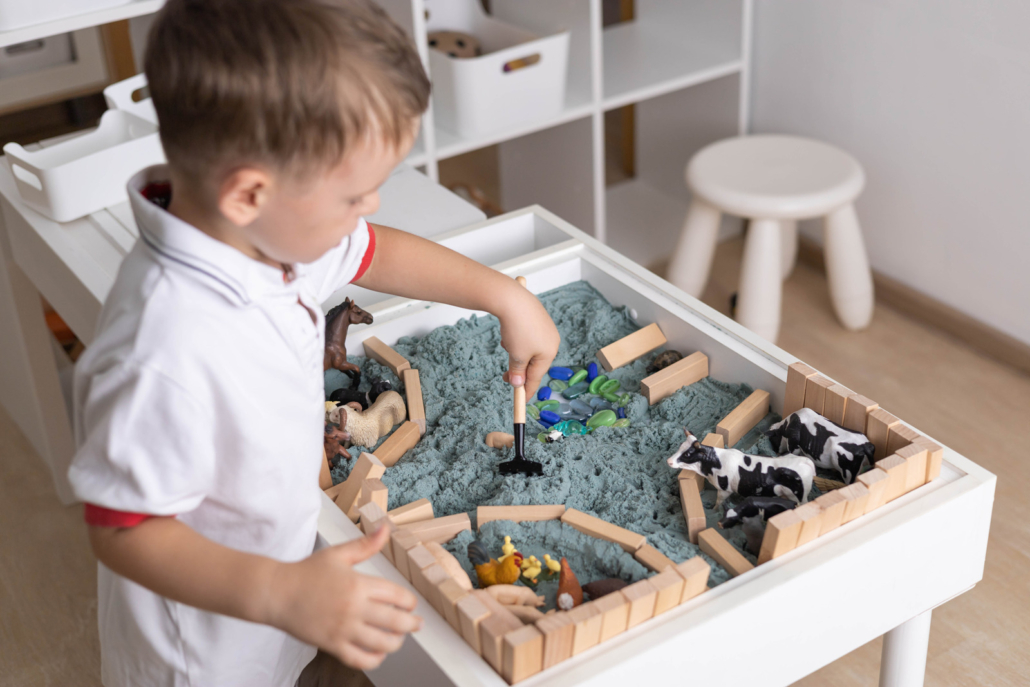
Play Therapy is an expressive form of therapy for children that may assist with managing trauma and challenging behaviors. Play Therapy often takes place in a room where there is a variety of objects, such as sand trays, doll houses, dolls, puppets, or miniature toys (Higgins-Klein, 2013). It is a place where creativity and self-expression take place. When children enter the Play Therapy room, they know exactly what will be taking place… playing. When parents enter the Play Therapy room, they are often uncertain of what to expect and how to manage it. Here are a few tips to help parents understand the Play Therapy room.

Tip #1 No Stresses over Messes:

The Play Therapy room is a messy place. Oftentimes many parents feel the need to treat the Play Therapy room as a traditional counseling space, living room, doctor’s office or classroom. There are many limitations placed on children in their various environments. The Play Therapy room is the space for a child to not feel burdened by limitations of expression. It is a space for them to feel grand, powerful, and safe. There are going to be transitions from one activity to the next without cleaning up. Sand will fall out of the tray and objects will be used for things other than their intended purpose. When these things inevitably happen, let it be. The clinician will be able to clean up at the end and restore the room to its original state.

Tip #2 Express Your Inner Child:

Most parents have that creative, imaginative space inside of them. When they were younger, playing with dolls or action figures, baking a cake in the play kitchen, or singing a pop song to all of their fans were things that they enjoyed doing. Parents engage in pretend play when they dress up for holidays or conventions. When in the Play Therapy room I encourage parents to allow themselves the freedom to get into character. That can be done by creating special voices for the characters, names, and other unique features. The more invested the parents are in the play, the more invested their children become in sharing their experiences.

Tip #3 Hold your Questions:

Play Therapy is a unique form of child therapy that may yield extraordinary results. It all comes with time and the belief that it can happen. Parents ask questions or make comments out of genuine curiosity and concern when engaging in a family session. The commentary is most helpful to ask when you and/or your child are not actively in play in order to not disrupt the process. Some of these questions and comments include “What does this mean?”, “I’m not understanding what’s happening”, “What am I supposed to learn from this?”. Questions about what may be taking place in the play when parents are present may deter children from expressing more with parents in the room or even without parents present. I encourage parents to ask these questions when not actively in play. The best time for questions and comments is in the beginning in regard to expectations and roles.

Play Therapy is a very personal experience and the Play Therapy room can be a sacred space where a child shares their innermost concerns and fears. This space can and will get messy, have noise, and parents pretending to be fire trucks and talking horses. When parents treat the space with the same regard as their child, deeper healing can occur.

References:

Higgins-Klein, D. (2013). Mindfulness- based play- Family therapy theory and practice. W.W. Norton


March 27, 2024/by Toriann Clarke
Topics: CATCOE
Share this entry
  • Share on Facebook
  • Share by Mail
  • Facebook Facebook Share on Facebook
  • Square-x-twitter Square-x-twitter Share on X
  • Linkedin Linkedin Share on LinkedIn
  • Reddit Reddit Share on Reddit
You might also like
The 3 C’s of Parenting: Clear, Concise, and Consistent
The Unexpected Lessons of Parenthood: A Counselor’s Journey
The Power of Play in Parenting: Nurturing Healthy Connections
Home Interventions Supporting Children Living with ADHD
How Caregivers Can Support Teens to Better Manage School Burnout
3 Ways to Foster Assertive Communication in Children
Search Search

Latest News

  • The Five Retirement Pathways, a New Psychology Today Article by Michael Shelton, MS, LPCMarch 2, 2026 - 3:19 pmby: Equilibria PCS
  • Clinician Erika Kawamura, Psy.D Featured in Flow Space Article on Midlife Relationship ChallengesFebruary 12, 2026 - 11:48 amby: Equilibria PCS
  • Involuntary Retirement, a New Psychology Today Article by Michael Shelton, MS, LPCFebruary 5, 2026 - 10:54 amby: Equilibria PCS
  • Equilibria is Now Serving the Mental Health Needs of Berks County With Telehealth Services!November 8, 2023 - 9:44 amby: Equilibria PCS

Latest Articles

  • Anticipatory Grief: How to Cope Before a LossApril 30, 2026 - 1:49 pmby: Equilibria PCS
  • Stress Management Part II: Protect Your Health & Wellbeing with Healthy Stress ManagementApril 21, 2026 - 12:53 pmby: Equilibria PCS
  • What to Say (and Not to Say) to Someone Who is GrievingApril 14, 2026 - 3:04 pmby: Equilibria PCS
  • Stress Management Part I: Where Are You on the Stress Bell Curve?April 8, 2026 - 1:32 pmby: Equilibria PCS

Workshops & Events

  • Introduction to ERP for OCD in Children and AdolescentsApril 23, 2026 - 11:14 am
  • “You’re Not Listening to Me!”: How to Navigate Conflicts Between Parents and TeensApril 10, 2026 - 12:52 pm
  • Before We Say Goodbye: Anticipatory Grief Counseling Strategies to Promote Meaning and LegacyApril 6, 2026 - 1:03 pm


Equilibria Mental Health Services / Equilibria Psychological and Consultation Services has been proudly serving the community for over 15 years.
Leave a Review ➡

OUR SERVICES

  • Therapy for Adults
  • Therapy for Children
  • Couples Therapy
  • Psychological Testing
  • Psychoeducational Training

CONTACT US

Equilibria Psychological &
Consultation Services

Phone: (267) 861-3685

LOCATIONS

Society Hill:

525 S. 4th Street
Suite 471
Philadelphia, PA 19147

_______________________

Fishtown:

1516 N. 5th St
Suite 401
Philadelphia, PA 19122

____________________

Maple Shade:

1000 S. Lenola Road
Building One, Suite 106
Maple Shade, NJ 08052

LOCATIONS

Media:
100 W 6th St
Suite 300 Media, PA 19063

_______________________

Lafayette Hill:
632 Germantown Pike
2nd Floor
Lafayette Hill, PA 19444

_______________________

Broomall:
2004 Sproul Road
Suite 206
Broomall, PA 19008

______________________

Willow Grove:

630 Fitzwatertown Rd
Suite A1
Willow Grove, PA 19090

Copyright © 2018-2025 Equilibria PCS. All rights reserved.
This site is protected by reCAPTCHA and the Google Privacy Policy and Terms of Service apply.
  • Link to Facebook
  • Link to Instagram
  • Link to LinkedIn
Link to: The Littlest Therapist & Firefighter Link to: The Littlest Therapist & Firefighter The Littlest Therapist & Firefighter Link to: Your Therapist Can’t Read Your Mind Link to: Your Therapist Can’t Read Your Mind Your Therapist Can’t Read Your Mind
Scroll to top Scroll to top Scroll to top