A Caregiver’s Guide to Eating Disorder Prevention in the Digital Age: Tips to Foster Positive Self-image and Food Neutrality in Teens
Author: Kathryn Lodwick-Jones, LPC, BC-DMT, NCC
Children and teens are using social media younger than ever before. Early exposure to problematic trends and ideologies paired with repeated messaging about “ideal bodies” during critical development periods increases susceptibility to developing unrealistic long-term beliefs about food and self-image. Although there are a variety of resources to address internal (genetic, medical, mental health) risk factors as well as socio-cultural and societal risk factors (e.g. diet culture), caregivers often feel ill-equipped to address or mitigate unique risk factors imposed by social media consumption. This article aims to provide caregivers with a framework for how to more confidently address the increased risk factors for eating disorders (ED) imposed by social media and engage in ED prevention strategies.
Common Risk Factors for Adolescents
Like adults with eating disorders, adolescents face similar risk factors but are more susceptible to developing an ED than adults due to cognitive development, limited coping skills, and increased mood instability due to development. Common risk factors that contribute to the development of an eating disorder in adolescents include genetics, family history, the presence of another mental health disorder (e.g. anxiety, depression, obsessive compulsive disorder), trauma, history of dieting behaviors or malnutrition, history of weight or appearance-based harassment, or history of bullying.
Understanding the Unique Risks of Social Media
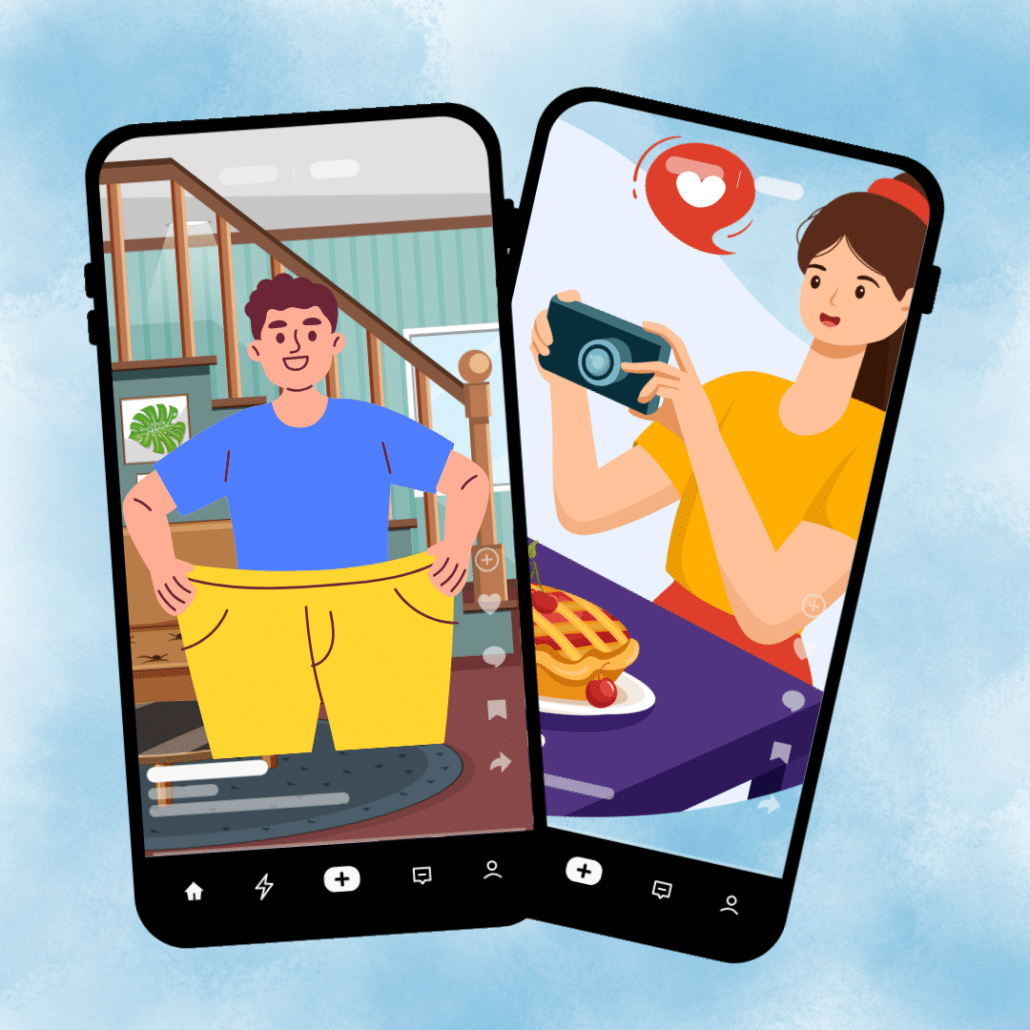
The normalization of unrealistic body image standards and constant exposure (doomscrolling, aimless or unsupervised consumption without intent) can lead to self-comparison and body image dissatisfaction, increasing a teen’s risk factors for anorexia nervosa or bulimia nervosa. The normalization of using filters to demonstrate “perfect” or “glass skin”, “progress photos” documenting an influencer’s fitness or weight loss journey, or anti-aging promotion like Botox disguised as skin care can lead to beliefs that one is not enough as they are, or should always be improving or changing their bodies to be worthy or attractive.
If a teen views weight loss content once, they may start seeing more extreme material (thinspiration, restrictive dieting, promotion of orthorexia, and weight loss). Constant exposure to algorithm-driven content loops can normalize unhealthy behaviors and make them seem common or desirable, especially if they see same-aged peers or role models engaging in or encouraging them. Social media usage also fosters constant social comparison and validation culture. An influencer’s status is driven by engagement including likes, comments, follower-counts and re-shares so, when social media content receives more attention, even if negative, teens can associate self-worth tied to appearance or engagement on normalized but potentially harmful or problematic behaviors. The constant exposure to the intimate details of another’s life without consent, like tracking body changes, food consumption and exercise routines can lead to anxiety about looks. Additionally, exposure to harmful comments and cyberbullying based on looks or lifestyle choices can lead to low self-esteem or shame. Community trends like extreme dieting and fasting challenges, What I Eat in A Day that models undereating, pro-eating disorder content (sometimes disguised as wellness), Skinnytok, and teasing or harassment that promote peer comparison is particularly influential during adolescence when identity and sense of self is forming.
How to Reduce Risk Factors in Daily Life and Online
Caregivers play a significant role in reducing risk factors and increasing protective factors to prevent the development of eating problems in children and teens. Although social media is a large and overwhelming space, you as a caregiver can foster a nurturing environment to allow your teen to feel supported. In fact, many studies indicate positive and secure relationships with adults can directly reduce ED risk factors. Here are some strategies to help you get started helping your teen develop a healthier relationship with food, their body, and social media usage:
- Emphasize healthful and positive behaviors to improve well-being rather than focusing on dieting or weight. For instance, encourage your teen to eat more fruits and vegetables and exercise regularly for their mental health, rather than focusing on decreasing ice cream or exercising to earn food.
- Reduce value-based language around food and model food neutrality and body acceptance at home. Rather than labeling food as “good” or “bad,” or marking vegetables as “healthy” and candy as “junk”, talk about the nutritional function of food. These foods make your muscles stronger, while these foods make you feel more at home. Chocolate can be healthy too; it gives us calories for energy or can make us smile when having a bad day. Talk openly about eating all types of food, think “I had a rough day at work, I think slowly eating a bowl of ice cream may reset my mood”, or “I know my tummy hurts, so instead of eating ice cream, I’m going to have a fruit smoothie”. You can also discuss exercise as a means to get stronger or to meet a fitness goal not based on appearance (think “I want to be able to run a mile without a break” rather than “I’m training to get my bikini body”).
- Teach body functionality over appearance. Not only can we talk about the function of eating all types of food, but also the function of our bodies and normalize changes. It is normal for bodies to change throughout the lifespan, especially during puberty and adolescence.
- Create open, non-judgmental communication about emotions and self-image. It’s normal to not feel good about yourself every day, but it doesn’t have to become a pattern or means of punishment. Openly discuss, where appropriate, when you yourself may be struggling with your own body image and model adaptive ways you address it. Normalize emotions and struggles and let them know it’s okay to feel unsure about their body sometimes and emphasize that talking about it is safe and unimportant.
- Collaboratively manage media consumption and social media content as much as possible and promote nuance. Not all social media use is harmful, it can also provide support communities, promote body positivity and recovery content, increase awareness of mental health, or foster connection through similar lived experiences to reduce isolation and stigma. Review the types of influencers or pages and content that your teen is following or engaging with. If something seems concerning, you as the caregiver have a right to limit their exposure or engagement. This is a great opportunity to engage in a dialogue about your reasoning and get them thinking about why following this page may not be helpful. Young brains can’t fully understand the power of the algorithm; it’s our job to monitor and protect them.
- Create opportunities for conversation and critical thinking, and start small and start early. Keep it simple and age appropriate, whether it’s while looking at content together or during meal or bedtime, or engaging your teen in an open dialog about their thoughts, opinions and concerns about various topics. In the instance of concerning online engagement, be sure to address bullying, peer pressure, or problematic dieting or sports culture immediately. Focus on safety rather than judgement or shaming. Foster two-way conversations and ask open ended questions like “What have you heard about body image at school?”; “How do kids talk about food or exercise?”; and listen without interrupting or correcting.
- Be mindful of your own comments and model self-correction, reflection, and unlearning. Kids absorb what they hear and presume that’s how the world works,and how they should behave too. Avoid criticizing your own or other’s bodies or appearances.
- Address media and role models by talking about how movies, athletes, and social media often show unrealistic body types. Help them understand that strength and health don’t look just one way and promote diverse and realistic body representations .
When and How to Seek Help
Getting help for disordered eating concerns can seem daunting, but it doesn’t have to be. There are many skilled pediatricians, therapists and psychologists, and registered dietitians who can provide support, guidance, and assessment. Reach out to a mental health professional or your teen’s pediatrician if you observe the following: Sudden preoccupation with weight, calories, or “clean eating”, avoiding meals or eating in secret, excessive exercise, or mood changes tied to appearance or social media usage.
Equilibria is a group of licensed mental health professionals in Pennsylvania and New Jersey with multiple specialties to serve all aspects of our diverse community’s mental, emotional, and behavioral needs. We provide in person and telehealth services to individuals of all ages, families, and those in relationships. Click here to schedule an appointment today.